Robert Gibbons: Four Poems Newly Sighted


An Act of Bricolage
 
Wake up to the train, again, running right through town at 6:30 holding up a whole line of 7:00 workers. Just flashed on how Seattlewoke to the sun curving round the mountain as I watched the homeless up before workers in the stained-glass dawn. In the dream the woman in my arms remained elusive. I remember hunkering down last night feeling good about myself, but by morning had the task of reassembling all of that. An act of bricolage: place this stone here, try abandoning that pattern, bookmark the page where Freedom calls for novelty, brush the dust off the gladioli, garner a certain selflessness in reassembling the Self.

Writing on Goya
 
One doesn’t simply run head-on into Goya snorting some interpretation, or other. Nor stroll through the gallery of history as Nietzsche warns against in his Untimely Meditations without suffering life from the ground up. Rather, run gauntlet. Fight against one’s Time. I’m not gazing at any specific work, but Goya’s vicious brushstrokes, fierce blacks, penetrating vortexes, barely audible grunts & barks as titles swirl, hurt brain & viscera, make black blood blue. To get to Goya is to go through Lorca through Guernicathrough gore of bull & sword, peasant & starvation, through that which is unimaginably worse. One doesn’t simply sayrape, torture, mutilation without potential disastrous ramification, but blood is in the veins till running from gash & wound into the ground, when Death grants another pardon in order to lift pen, & crack voice open as vessel. Stark, raving, angered at injustice, typing on the keyboard till fingerprints are raw, then gone.
 
Snake of Time
 
She knows I do, I do, that is, function quite well within the realm of chaos. Contrast that with any kind of outside forced regimen, well get me the hell out of there! Which is all well & good, the way things went recently at the gathering, where everything seemed to want to implode, whereupon I took a deep breath, got up on stage & turned the whole upside-down right-side up, instinctively, jazzed, a prime pithecanthropus erectus Mingus taught to walk saying to the audience, “I’m going to try to shove the tail into the mouth of the snake of Time, & read what I planned to read last, first!” The improvisation worked; the moment became a strong bass line carrying the whole piece on  the newfound round legs of the snake of Time. 
 
The Merlin Bird 
 
Last night’s dream: archetypal, premonitory, erotic, all at the same time, but I’ll keep that to myself. It’s validating, nonetheless, for any venture forth into the real world. A kind of confidence one is on the right track, path, way. Don’t ask me why I turned & faced the cliff rather than horizon at that exact moment today. When I did what I guessed was a young pigeon hawk slid between stone & arbor with the kind of winged lordliness any prehistoric man or woman would call a god. Almost secretively, it may well have been invisible, in fact, if one didn’t believe in mystical occurrences, it would have remained the impossible. I was alone. With the image. I looked heavenward. A kind of grace, a gratitude for what this life offers. What life offers. It’s not as easy as it sounds, I know that. You know that. If it’s merely a matter of paying attention, so be it. Pay attention. Now, I didn’t just steal that from Frank O’Hara, but it rings a bell about how poets approach things. Carefully, filled with risk, nostrils & eyeballs & gonads, first. It’s not easy. The difficulties. In love with the difficulties Yeats learned from Beardsley, Olson learned from Yeats, Robert Frank learned independently. Nothing easy in the act of art, & if there is, it won’t last. I’ve heard from friends in Lyon, Madrid, København, Oxford, Perth, Salemtoday. Jane Harrison wrote that any form of intense concentration is prayer. She was British. I am American. The pigeon hawk is really the Merlin bird, a falcon. While writing this, an instrumental came on the radio by Lara & Reyes titled Dulce Libertad (Sweet Freedom), which hard-won, I wish for you.

[NOTE, Robert Gibbons’ work, still not well enough known, revives & continues the genre of the prose poem from Rimbaud & Baudelaire into the present.  His two recent books from Nine Point Publishing, This Time and Traveling Companion, appear in covers adorned by images from Goya and satisfy the older appraisal directed to  him by Guy Davenport: “It is admirable, and astonishing.  You are where Rimbaud was when he wrote the Illuminations.  Or as William Heyen cites him in A Poetics of Hiroshima: “Gibbons’ learning is capacious and humble, the light of his mind breathtaking, and the self-effacing homage he pays to the places and to the authors he has inhabited in writings ranging from the domestic to the cosmic is at once brilliant, poignant, and silent.”  His latest book, Olson/Still: Crossroad“prose pieces on the similarities & distinctions between art in paint by Clyfford Still & art in language by Charles Olson” has also just been published by Nine Point.]

The Lermontov Translations (1): "Untitled Poem" & "The Dream"

Transcreations from Russian by Jerome Rothenberg & Milos Sovak

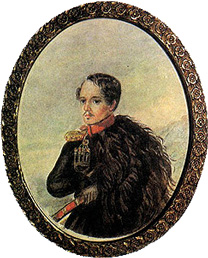
Mikhail Lermontov - Selfportrait - 1837


[The appeal to me in the works that follow was in the harshness and fury of Lermontov’s romanticism, but it was just this note of contempt, as in his “iron verses / bursting with bitterness / & rage,” that marked him as a poet who displayed, as Nietzsche wrote of Heine, “that divine malice without which I cannot conceive perfection.”  It was that spirit – not necessarily our own – that Milos Sovak & I tried to capture in a project to translate Lermontov anew, sadly terminated by Milos’s death in 2009.  I’ll present the four poems we did accomplish in two installments. (J.R.)]

Untitled Poem

spleen & sadness,
not a hand held out
& heartsick

craving it!
& what’s the good
if any, ever?

Or forever – years lost
& the best of years!
Or maybe love

with whom?
the time too short,
not worth it

& forever    love
impossible
to look inside you

deep down, not a trace
of lost time
joys & miseries

turned into nothing
asking: what is passion
that sweet sickness

& how long & whether
it will last or fade
when brought back to your senses

& life too? just wait
& take a long hard look
& see it like it is

an empty
stupid
joke


The Dream

noon heat ablaze
       here in this gorge
             in Dagestan

lead in my chest
      I lie unmoving
            deep wound

steaming still
      a trace of smoke
            & drop by drop
my blood
      escaping

sand in the gorge
            I lie alone
                        the ragged edges
of its cliffs
            encircle me
                        the circle closing
& the sun is battering
            the yellow summits
                        scorched
asleep inside
            my dream that’s dead

2
 
& in my dream I dreamed
            a night of shining lights
                        an evening feast
down home
            into & out of which
                        a company of women
garlanded with flowers
            circling
                        spoke about me
gaily
            gaily
      
only one girl
            who didn’t speak or laugh
                        apart from all of them
alone
            but sat & pondered
                        sunk into her dream

what sadness
            made its way
                        into her soul
god knows what thoughts
            her thoughts were raising

when a gorge in Dagestan
            broke through
her dream

a body that she knew
            lay in that gorge
                        & on its breast
an open wound
            still steaming
                        turning black now
& the black blood flowing
            in a stream
                        & getting colder
colder still
            & colder

James Cook: From The Croatoan Song Book "If You Wish To Become an Owl, Movement I" (an excerpt)


                                                (Mule Stable Gray)

“One day the demons of America must be placated. The ghosts must be appeased, the Spirit of Place atoned for…” – D.H. Lawrence

Sources of creeks and rivers. Earth humid black and rich. On the river ahead not far distant. The wind was hard and against us. Passed through a broken country. Wood pumice stone lava. Mule stable gray…

They brought balls of cotton thread and parrots and spears. Maps rotten and spoiled with rain, armor almost eaten through with rust.

(One day in the old times when we could still talk with other creatures)

Soon the news went around that the terrapin had killed the wolf and was using his ears for spoons.

The spirit of absolutism is everywhere apparent. Shouting his name to the echoing solitudes. Intrepid conflict with obstacles without. Because he had thought he had seen a great beehive.

They take the form of stones full of living blood and flesh. The rabbit inside kept singing…              

                        a cloud in the shape
                                                  of an old woman
                                                 kneeling

                                     arms extended toward the moon

 
                        You, I’ve known you from old

                         hair full of fish

                        thighs a woven rumor of feathers

                                     & I’m out walking sleepless

                                   scribbled in the snowy margins
                                                              like an insomniac’s
                                                restless prose

                        on a street where I imagine
                                                  ghost-horses haunt
                                                   the weird cosmologies
                                                                  of some kid’s dreams

                                      (no riders
                                                                   just manes passing
                                                                  behind black branches
                                                                           in tiny yards…)

                                                (just apocrypha drifting
                                                                            off the city’s edge)

                                     & a moon up there
                                                                made of wire                        

                        while shoppers
                                    go on shopping                         

                                    with dark coats
             
                                                              at Christmastime

 
Of the book rubb’d away
            Of the lines of the sun and the wrist
 

                        (followed
                                     the wounded schematic

                        to a muddy path
                                    that disappeared down into the creekbeds…)
 

                                                            By the persuasion of some of them we went
                                                                        into ye great river
                                                                                       that divides itself in 2
 

by flashlight light he recognized
            the woods from his dream

 
            where Anna left her dress
            on the riverbank

                       
                                         & where he’d gone looking for her
                                                                             
                                                       out in the old incunabula

 
                                                                        ( here is the great tree
                                                                                    we carved
                                                                                    our masks from )
 

                                    …sweated out the fever
                                 in a room
                                    above a dusty hardware

                                                 & all of this was
                                    as a notebook
                        lost in a dream 

                        & if you wish to become an owl
                                                            yr little radio’s got 

                        all these ghost songs
                                    memorized           

                                    & if you wish to become an owl
                        spell the movie of this forest
                                    with yr eyelids shut 

            listen how water          

                        shapes itself                       

                                    in the falling 

                        & snow takes these figures
                                    into its secret
                                                            light 

                        if you wish
                        to become an owl 

                        sit in the swamp
                                    ten nights
                                    wishing
                                                to become an owl…

[NOTE. With "The Croatoan Song Book" James Cook makes his entry into the tradition & lineage of American epic poetry ("a poem including history"), the focus here on the "lost" Roanoke colony in 16th century Virginia.  The notes that follow speak eloquently to his sense of time & structure.  (J.R.)]

The Croatoan Songbook: Notes for Jerome Rothenberg 

SOME NOTES ON INTENTION:

A prayer for & hymn to America.
 
A psychogeographical exploration.

An elegy. America as Loss, as Enigma.

DH Lawrence’s ‘one day the Spirit of Place must be atoned for…’

A work whose primary purpose is to exult the handmade, the homemade, the simply felt & created object as against the mass-produced, the cheap, the homogenous.
Reclamation of language from above.

Affirmation also of the vatic function of the poet. Of his role as a conduit.
Of the poem, as well as the chair or the dulcimer, as well  as America itself, as a manifestation of the tension between the inner world & the outer world.

The Croatoan Songbook as a piece of American folk art, like the Watts Towers or “The Cuckoo Bird” or an embroidery sampler.

Focus on the Local as a key to the Universal.

An attempt to map the ‘Dream-Time”, the Songlines of America. An attempt to trace a ‘spiritual’ map of America through the contours of history, including typically marginalized cultures, indigenous peoples, etc. in order to locate the moment of essential loss.

A response to Robert Kelly’s imprecation in his book In Time that : “It is the true annals of magical time that need to be compiled – or if not compiled then duly & accurately transcribed at each moment, in overlapping palimpsestical overlays, vast collages of magical time in the dark & light of which we will be able to perceive authentically as in books of ‘history’, the true history of our race.”

SOME NOTES ON STRUCTURE:
The poem will consist of 32 movements, with each movement broken up serially or composed of fragmentary gestures toward a lost wholeness.

A movement itself can consist of several individual sections or one long section=fragments on a charged field of white space.
Picture each movement as a tectonic plate. The location where two plates meet forms a tension which expresses itself as a geological event. The tension in the poem results from this boundary. This boundary is also the boundary between planes of experience, between cultures, between periods of history, between lyric and narrative, between Phanopoeia, Logopoeia and Melopoeia.

From "Shaking the Pumpkin Revisited: A Range of Poems from the Indian Americas"


[In advance of the forthcoming republication of Shaking the Pumpkin by Station Hill Press of Barrytown I’m posting again the following selection which appeared, with accompanying commentaries, in a recent issue of Poetry International, San Diego State University, & as an excerpt on Poems and Poetics.  Additional excerpts from Shaking the Pumpkin were posted earlier & more will be posted here between now & the actual republication.]

Pre-Face

In the aftermath of Technicians of the Sacred (1968) the next step I took toward the construction of an experimental ethnopoetics was an assemblage of traditional works and commentaries thereon focused entirely on one of the world’s still surviving and incredibly diverse “deep cultures.” The resultant work, Shaking the Pumpkin: Traditional Poetry of the Indian North Americas, was published by Doubleday Anchor in 1972 and in revised versions by Alfred van der Marck Editions (1986) and the University of New Mexico Press (1991). As with Technicians I drew from a wide range of previously published materials, supplemented in this instance by direct translations of my own and by those of later and very significant translators such as Dennis Tedlock and Howard Norman. I also continued to be freed by the opening of poetry among us to expand the range of what we saw as poetry elsewhere including sound works, visual works, and event and performance pieces on the model of contemporary happenings and performance art. My own translations – “total” and otherwise – from Seneca (with songmaker and ritual performer Richard Johnny John) and from Navajo (through the good offices of ethnomusicologist David McAllester) were also first presented here, and the commentaries, much like those in Technicians, provided analogues to other primal cultures and to the work of contemporary avantgardists. In the process I made no pretense about my own connection to the Indian nations in question, though for a period of a decade and more it was far from trivial, and my next ethnopoetic assemblage, A Big Jewish Book (later republished as Exiled in the Word) was in fact an exploration of ancestral sources of my own “in a world of Jewish mystics, thieves, and madmen.”

After three decades in print the life of Shaking the Pumpkin came to a natural closure several years ago, though a new edition has remained a tempting possibility since then. The following excerpts, not easily accessible until now, will give some sense of the range of work in this and other of our ethnopoetic gatherings – part of a process of composition that I’ve spoken of elsewhere as “othering” and that the great Brazilian avantgardist Haroldo de Campos has aptly termed “transcreation.” Such approaches, as we view them, have appeared to us not as a distortion or falsification of the original work but as the most poetic – and therefore the most honest way – to bring it forward.  As we move further into a new century and millennium the works shown here move from being an odd discovery to take on the status of genuine American classics – the oldest and truest that we have.  (J.R.)

Uitoto Indian (Colombia)
Genesis I

1.

In the beginning the word gave origin to the father.

2.

A phantasm, nothing else existed in the beginning: the Father touched an illusion, he grasped something mysterious. Nothing existed. Through the agency of a dream our Father Nai-mu-ena kept the mirage to his body, and he pondered long and thought deeply.

Nothing existed, not even a stick to support the vision: our Father attached the illusion to the thread of a dream and kept it by the aid of his breath. He sounded to reach the bottom of the appearance, but there was nothing. Nothing existed.

Then the Father again investigated the bottom of the mystery. He tied the empty illusion to the dream thread and pressed the magical substance upon it. Then by the aid of his dream he held it like a wisp of raw cotton.

Then he seized the mirage bottom and stamped upon it repeatedly, sitting down at last on his dreamed earth.

The earth phantasm was his now, and he spat out saliva repeatedly so that the forests might grow. Then he lay down on his earth and covered it with the roof of heaven. As he was the owner of the earth he placed above it the blue and the white sky.

Thereupon Rafu-emas, the man-who-has-the-narratives, sitting at the base of the sky, pondered and he created this story so that we might listen to it here upon earth.

Translation after K.T. Preuss, Die Religion und Mythologie der Uitoto (1921)

Omaha
Sweat-House Ritual No.1

listen old man listen
you rock listen
old man listen
listen didn't i teach all their children
to follow me listen
listen
listen unmoving time-without-end listen
you old man sitting there listen
on the roads where all the winds come rushing
at the heart of the winds where you're sitting listen
old man listen
listen there's short grasses growing all over you listen
you're sitting there living inside them listen
listen i mean you're sitting there covered with birdshit listen
head’s rimmed with soft feathers of birds listen
old man listen
you standing there next in command listen
listen you water listen
you water that keeps on flowing
from time out of mind listen
listen the children have fed off you
no one’s come on our secret
the children go mad for your touch listen
listen standing like somebody's house listen
just like somewhere to live listen
you great animal listen
listen you making a covering over us listen
saying let the thoughts of those children live with me
and let them love me listen
listen you tent-frame listen
you standing with back bent you over us
stooping your shoulders you bending over us
you really standing
you saying thus shall my little ones speak of me
you brushing the hair back from your forehead listen
the hair of your head
the grass growing over you
you with your hair turning white listen
the hair growing over your head listen
o you roads the children will be walking on listen
all the ways they'll run to be safe listen
they'll escape their shoulders bending with age where they walk
walking where others have walked
their hands shading their brows
while they walk and are old listen
because they're wanting to share in your strength listen
the children want to be close by your side listen
walking listen
be very old and listen

English working by Jerome Rothenberg, from Alice Fletcher and Francis LaFlesche

Luiseño (California)
Before They Made Things Be Alive They Spoke
by Lucario Cuevish

Earth woman lying flat her feet were to the north her head was to the South sky brother sitting on her right hand side he said Yes sister you must Tell me who you are she answered I am Tomaiyowit she asked him Who Are you? He answered I am Tukmit. Then she said:

I stretch out flat to the Horizon.
I shake I make a noise like thunder.
I am Earthquake.
I am round and roll around.
I vanish and return.

Then Tukmit said:

I arch above you like a lid.
I deck you like a hat.
I go up high and higher.
I am death I gulp it in one bite.
I grab men from the east andscatter them.
My name is Death.

Then they made things be alive.

-- English working by Jerome Rothenberg, after Constance G. DuBois

Navajo
A Song from Red Ant Way

The red young men under the ground
decorated with red wheels
and decorated with red feathers
at the center of the cone-shaped house
I gave them a beautiful red stone—
when someone does the same for me
I'll walk the earth

The black young women under the ground
decorated with black wheels
and decorated with black feathers
at the center of the flat-topped house
I gave them an abalone shell—
when someone does the same for me
I'll walk the earth

From deep under the earth they're starting off
the old men under the earth are starting off
they're decorated with red wheels and starting off
at the center of the cone-shaped house they're starting off
because I gave them a beautiful red stone they're starting off
when someone does the same for me I'll walk the earth like them
and starting off

On the red road and on the road they're starting off
The black old women under the earth are starting off
they're decorated with black wheels and starting off
decorated with black feathers and starting off
at the center of the flat-topped house they're starting off
because I gave them an abalone shell they're starting off
when someone does the same for me I'll walk the earth like them
and starting off
from deep under the earth they're starting off

—English working by Jerome Rothenberg, after Harry Hoijer

Yaqui
From Flower World Variations: Song of a Dead Man

I do not want these flowers
moving
but the flowers
want to move
I do not want these flowers
moving
but the flowers
want to move
I do not want these flowers
moving
but the flowers
want to move
out in the flower world
the dawn
over a road of flowers
I do not want these flowers
moving
but the flowers
want to move
I do not want these flowers
moving
but the flowers
the flowers
want to move

—English version by Jerome Rothenberg

Tule/Cuna
Spyglass Conversations

(A girl looking through a spyglass says)
You cannot see mountains and valleys in the clouds,
I see the clouds as big as trees.
When I look far away I see the clouds like cliffs of high, gray rocks.
I see a cloud that looks like a coconut tree.
The clouds come up and come up in different shapes.
There are clouds that look like breakers,
You don't see the colors and shapes of the clouds,
I see them like people moving and bending, they come up just like people.
There are clouds like many people walking.
I see them every time I look out to sea with the glass.
Sometimes a cloud comes up like a ghost, and sometimes like a ship.
I look far off through the glass and see everything.
I see a cloud that looks like a sea horse, a wild sea horse that lives in the
water.
I see a cloud like a deer with branching horns.

(The boy beside her says)
You don't see that at all.

(But the girl says)
From the time I was a child I didn't think I would see such things as
these.
If I don't look through the glass I can't see them.
Now I find out the different things the clouds make.
Do you want to see them too?

(The boy says)
All right. I want to see them too. (He looks through the glass.)
Now I see funny things.

(The girl says)
Now you see all those funny things.

(Then the boy says to a younger girl)
You want to see them too?

(But she says)
I'm too young.

(The boy says to the older girl)
Look down into the water with the glass.

(The older girl says)
Now I see strange things under the water.
I see things moving around as though they were live animals.
I see things there that look like little bugs – many strange animals under the sea.

Translation by Frances Densmore

Navajo
Navajo Animal Songs

1.

Chipmunk can't drag it along
can't drag it along

Chipmunk holds back his ears

2.

Chipmunk was standing
jerking his feet
with stripes
he's a very short chipmunk

3.

Mole makes his pole redhot
Says: I'll shove it up your ass
Says: feel how it shakes your belly

4.

Wildcat was walking
He ran down here
He got his feet in the water
He farted
Wow, wow! says Wildcat

5.

A turkey is dancing near the rocks
shoves out his pelvis
woops-a-daisy we all go crazy

6.

Big Rabbit goes to see his baby
pisses
pissing all around him

7.

Pinionjay shits pebbles
now he's empty

English versions by Jerome Rothenberg, after David McAllester

Three Poems by Paul Celan from Snowpart

Translated & annotated by Pierre Joris


Ein Blatt, baumlos,
für Bertolt Brecht:

Was sind das für Zeiten,
wo ein Gespräch
beinah ein Verbrechen ist,
weil es soviel Gesagtes
mit einschließt?

A leaf, treeless,
for Bertold Brecht:

What times are these
when a conversation
is nearly a crime,
because it includes
so much being spoken.

 
Playtime: die Fenster, auch sie,
lesen dir alles Geheime
heraus aus den Wirbeln
und spiegelns
ins gallertäugige Drüben,

doch
auch hier,
wo du die Farbe verfehlst, schert ein Mensch aus, entstummt,
wo die Zahl dich zu äffen versucht,
ballt sich Atem, dir zu,

gestärkt
hält die Stunde inne bei dir,
du sprichst,
du stehst,
den vergleichnisten Boten
aufs härteste über
an Stimme
an Stoff.

Playtime: the windows, they too,
read you all that secrecy
from your whirls
and mirror it
in the jelly-eyed beyond,

but
here too,
where you miss the color, a human sheers off, unmuted,
where the number tries to ape you,
breath clots, toward you,                         

strengthened
the hour stops next to you,
you speak,
you stand,
most firm above
the parabelized messengers    
by voice
by matter.

 
Offene Glottis, Luftstrom,

der
Vokal, wirksam,
mit dem einen
Formanten,

Mitlautstöße, gefiltert
von weithin
Ersichtlichem,

Reizschutz: Bewußtsein,

unbesetzbar
ich und auch du,

überwahr-
heitet
das augen-, das
gedächtnisgierige rollende
Waren-
zeichen,

der Schläfenlappen intakt,
wie der Sehstamm.

Open Glottis, airstream,
the
vowel, effective,
with the one
formant,

consonant-thrusts, filtered                     
by clarity clear
from afar,

protection shield: consciousness

uncathectable
I and you too,

overtruth-
ed
the eye-
the memory-greedy rolling
commodity
sign,

the temporal lobe intact,
like the visionstem.


COMMENTARIES

               Ein Blatt | A leaf
               Celan’s response to Bertold Brecht’s poem “An die Nachgeborenen,” the second stanza of which asks:
What kind of times are these when
                        To talk about trees is nearly a crime,
                        Because it avoids speaking of all that’s evil!
(my translation)
         
               Playtime | Playtime
               Allusion to “Playtime,” a 1967 film by Jacques Tati, in which American tourists visit a futuristic Paris. Many scenes are shot through windows and mirrors.
               verses 2 to 5: Barbara Wiedemann [BW 849] suggests a possible connection to Shakespeare, Hamlet, I.2, where Horatio recalls the ghostly apparition: “ a figure like your father … Thrice he walked / by their oppress’d and fear-surprised eyes, / Within his truncheon’s length; while they, distill’d / Almost to jelly with the act of fear, / stand dumb and speak not to him. This to me / in dreadful secrecy impart they did.”
               du stehst | you stand: see the importance of this stance as detailed throughout Celan’s work.
               vergleichnisten | parabelized  : Celanian neologism incorporating “vergleichen,” to compare, and “Gleichnis,” parable or allegory.

               Offene Glottis | Open Glottis
               Composed on July 19 1968, one of 10 poems written that day. For all of those poems, as for the one above, his reading of Walter Benjamin imports. The first draft sheet has Benjamin quotes, and Benjamin quoting Freud on it. This poem can be read as a poetological statement, or as his French translator Jean-Pierre Lefebvre puts it, “a brief manifesto of Celan’s philosophy of language… [using] the linguistic terminology of the 50s and 60s, strongly influenced by [Ferdinand de] Saussure and [Emile] Benveniste.” [Part de neige, p. 140]
               Offene Glottis, airstream | Open glottis, airstream: Reading trace in Reichel/ Bleichert: “The narrowing (of the by quiet breathing open) glottis to a slit rests on the collaboration of the muscles of the larynx, that bring the arytenoid cartilage closer together… and tauten the vocal cords.” 9 p. 215)
               formant | formant: any of several bands of frequency that determine the phonetic quality of a vowel. The spectral peaks of the sound spectrum |P(f)|’ of the voice [Gunnar Fant]. It also refers to the acoustic resonance of the human vocal tract, often measured as an amplitude peak if the frequency spectrum of a sound. [New Oxford American Dictionary]
               Mitlautstöße | consonant-thrusts: In “Mitlaut” one probably hears the “mit” with and “laut” sound/ing better than in “consonant,” though of course our latinate term has the “con,” with, and “sonare,” to sound, and thus the same two meaning syllables. Reading trace in Reichel / Bleichert: “The very variable character of the consonants rest without exception on a typical form of the supraglottic air passages in mouth and nose, through which the air is blown spasmodically or more continuously.”
               Reizschutz | protection shield: A term from Freud’s Beyond the Pleasure Principle, where Celan underlined it, usually translated as “protection against stimulation [or stimuli].”
               As Rainer Nagele, whose term “protection shield” I am using, writes: “Like his name, Freud’s vocabulary gives us no license to translate the poems into psychoanalytic theory. Yet we cannot discard the signals set by this vocabulary. We have to take the poem on its own terms, which includes the recognition that its ‘own terms’ are not entirely its own. We have to recognize the poem as a translation, not a translation of Freud’s text, but a translation like Freud’s text.” [Reading After Freud: Essays on Goethe, Hölderlin, Habermas, Nietzsche …, p. 157]

[AN ADDITIONAL COMMENT.  Joris, who is our great translator of Paul Celan, here adds notes & comments to what will be his translation of the collected later poems, scheduled for publication by Farrar, Straus and Giroux in early 2014.  The foregoing affords a small taste of that and a sense, as needed, of the multiple sources behind the poems. (J.R.)]